

How Preventative Maintenance Reduces Downtime in Critical Power Systems
How Preventative Maintenance Reduces Downtime in Critical Power Systems
For organizations that depend on continuous, uninterrupted power to support their operations, unplanned downtime is one of the most costly and disruptive events imaginable. Whether it is a hospital losing power to critical medical equipment, a data center going offline during peak demand, or a manufacturing facility halting production unexpectedly, the consequences of power system failures extend far beyond the immediate disruption.
The good news is that the vast majority of critical power system failures are preventable. Studies consistently show that most unplanned outages in mission-critical environments are caused by issues that could have been identified and resolved through regular preventative maintenance. For organizations serious about uptime, reliability, and operational continuity, a structured preventative maintenance program is not optional. It is essential.
What Is Preventative Maintenance for Critical Power Systems
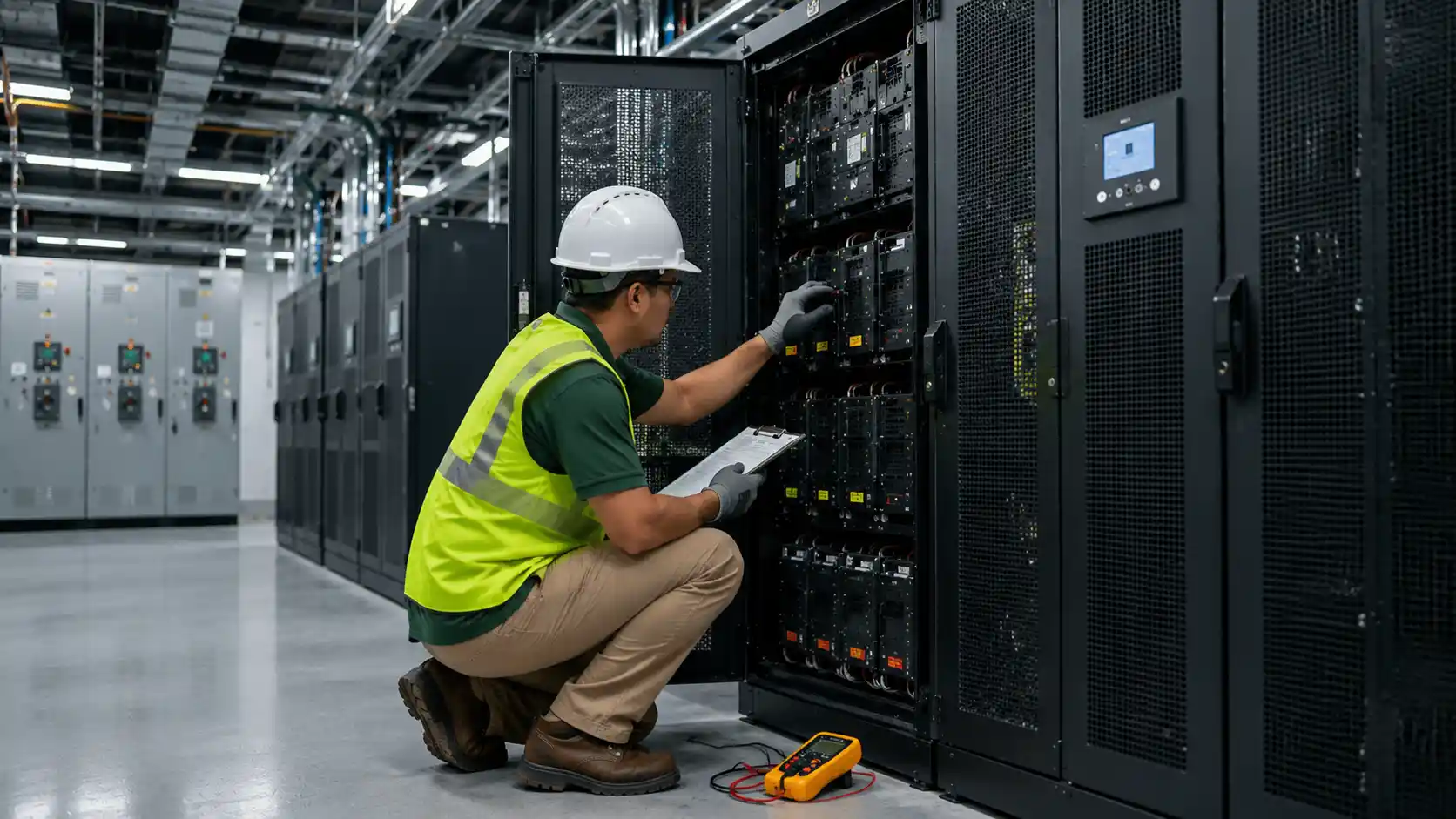
Preventative maintenance refers to a structured program of scheduled inspections, testing, and servicing designed to identify and address potential issues in critical power infrastructure before they cause failures. Unlike reactive maintenance, which responds to problems after they occur, preventative maintenance is proactive. It keeps systems operating reliably by catching wear, degradation, and developing faults early, when they can be resolved quickly and cost-effectively.
For critical power systems, preventative maintenance typically covers uninterruptible power systems, battery banks, power distribution equipment, automatic transfer switches, switchgear, generators, and other infrastructure components that support continuous operations. Each component has specific maintenance requirements based on its design, operating environment, and criticality to overall system performance.
The Real Cost of Unplanned Downtime
Before exploring how preventative maintenance reduces downtime, it is worth understanding what unplanned downtime actually costs organizations in mission-critical environments.
For data centers and AI factories, industry estimates place the average cost of unplanned downtime at tens of thousands of dollars per minute when accounting for lost revenue, recovery costs, customer impact, and reputational damage. For healthcare facilities, power failures can directly compromise patient safety and trigger regulatory scrutiny. For financial institutions, even brief outages can disrupt millions of transactions and expose organizations to serious compliance risk.
Beyond direct financial losses, unplanned downtime damages customer trust, strains operational teams, and often results in expensive emergency repairs that far exceed what a structured preventative maintenance program would have cost. The math is straightforward. Preventative maintenance is significantly less expensive than the downtime and emergency repairs that result from neglected infrastructure.
How Preventative Maintenance Reduces Downtime
Early Detection of Developing Issues
The primary way preventative maintenance reduces downtime is by identifying developing issues before they become failures. Thermal imaging and infrared scanning, for example, can detect heat buildup in electrical connections, switchgear, and UPS components that indicate potential failure points. Catching these issues early allows technicians to address them during scheduled maintenance windows rather than during emergency repairs after a failure.
Battery Health Monitoring and Testing
Battery failures are one of the leading causes of UPS system failures in critical environments. Batteries degrade over time, and individual cells can weaken or fail without any visible signs. Regular battery testing including voltage testing, impedance testing, and capacity testing identifies weak or failing batteries before they compromise the entire battery bank. Timely battery replacement based on test results is far less disruptive and costly than an unexpected UPS failure during a power event.
Load Bank Testing for System Validation
Load bank testing validates that UPS systems and backup generators can perform under real demand conditions. Many organizations discover during a load bank test that their systems cannot deliver the required runtime or capacity, revealing issues that would have only become apparent during an actual outage. Regular load bank testing ensures that backup power systems are genuinely ready to perform when needed.
Compliance and Regulatory Requirements
Many industries operating mission-critical infrastructure are subject to regulatory requirements that mandate regular inspection, testing, and documentation of critical power systems. Healthcare facilities must comply with standards such as NFPA 99 for healthcare facilities. Data centers operating under strict SLAs must demonstrate system reliability through documented maintenance records. A structured preventative maintenance program with detailed compliance reporting helps organizations meet these requirements consistently.
Extended Equipment Lifespan
Regular maintenance extends the operational lifespan of critical power equipment by identifying and addressing wear before it causes irreparable damage. UPS systems, battery banks, and switchgear represent significant capital investments. Protecting these investments through regular maintenance maximizes their useful life and delays costly replacement cycles, delivering significant long-term financial benefits.
Key Components of an Effective Preventative Maintenance Program
An effective preventative maintenance program for critical power systems should include several core elements. Scheduled service visits on a quarterly, semi-annual, or annual basis depending on system criticality and operational demands form the foundation of any maintenance program. Thermal imaging and infrared scanning should be performed regularly to detect electrical hotspots and developing faults before they cause failures.
Visual and electrical inspections of all critical power components including UPS systems, battery banks, switchgear, distribution equipment, and automatic transfer switches provide a comprehensive view of system health. Battery testing covering voltage, impedance, and capacity measurements should be performed at least annually, with more frequent testing for aging or high-demand systems. Load bank testing of UPS systems and generators validates performance under real conditions and confirms compliance with operational requirements.
Detailed compliance documentation covering all inspections, test results, findings, and corrective actions provides the audit trail organizations need to demonstrate regulatory compliance and support insurance requirements.
Choosing the Right Preventative Maintenance Partner
Not all preventative maintenance providers offer the same level of expertise, coverage, or accountability. For mission-critical power infrastructure, organizations should look for OEM-authorized service partners with certified field engineers who have hands-on experience with the specific equipment in their facilities.
Critical Power Solutions Group, Inc. is an OEM-authorized provider of preventative maintenance programs for critical power infrastructure across the United States, Caribbean, and Latin America. Recognized by Inc. 5000 as one of America’s fastest-growing companies and by Goldman Sachs 10,000 Small Businesses, CPS Group brings certified engineering expertise to every maintenance engagement.
Our customized maintenance programs cover UPS systems, battery banks, power distribution equipment, automatic transfer switches, switchgear, and complete power infrastructure for data centers, healthcare facilities, government installations, airports, financial institutions, and industrial operations. We provide detailed compliance documentation after every visit and back our programs with 24/7 emergency response capabilities.
Conclusion
Preventative maintenance is the most effective and cost-efficient strategy for reducing downtime in critical power systems. By identifying and resolving developing issues before they cause failures, organizations protect their operations, extend equipment lifespan, meet compliance requirements, and avoid the far greater costs of unplanned outages and emergency repairs.
For organizations where downtime is not an option, a structured preventative maintenance program delivered by certified, OEM-authorized engineers is not just a best practice. It is a fundamental requirement for operational resilience.
Contact CPS Group today to learn how our customized preventative maintenance programs can protect your critical power infrastructure and keep your operations running without interruption.